-
tel: +86-510-88799777
-
email: e-sales@ddhi.com.cn

EN
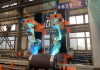
Exhaust Gas Aftertreatment Automated Welding Line Case Study
Exhaust Gas Aftertreatment Automated Welding Line Case Study
Apr 28, 2025


1. Overview
This automated welding line is designed for high-precision emissions control components. Key systems include:
l Multi-process robotic welding (with real-time laser tracking)
l High-precision leak testing & 3D inspection station
l Quick-change tooling (changeover ≤30 mins)
Operation Capability: Highly flexible and reliable. It supports 66 product variants on a single line, integrating intelligent welding and 100% leak testing to ensure near-perfect yield rates.
2. Typical Products
Exhaust systems (SCR catalytic converters & DPF filters).
3. Industries
Automotive emissions control manufacturing.
Recent Posts

October 26, 2016
The Most Successful Engineering Contractor
May 15, 2026
Robot painting
May 28, 2025
Purifier Industry Robot Welding Room
May 28, 2025
Mini Excavator — Robot Welding System
May 28, 2025
Longitudinal Seam Welding Production LineContact US
Product Information
Quantity
Unit
Piece
Support order samples, customization, wholesale direct, and complete payment. If the product you look for does not have corresponding customized content, pls fill out the form below to contact us, and we will reply ASAP.